Athlete Programme
When the issue is not ability, but what happens to ability under pressure.
Most high-level athletes know how to work hard.
They know how to train.
They know how to prepare.
They know what they are capable of.
But performance is not only about what an athlete can do.
It is also about what they can still access when the moment matters.
The Catalyst Athlete Development Programme is for athletes who want to understand what changes when pressure, expectation, consequence, injury history or emotion starts to affect performance.
Not in theory.
In the moment itself.
This programme helps athletes meet those responses through experience, develop greater self-awareness while pressure is present, and begin training the ability to respond with more clarity, regulation and intent.
The programme is not only for athletes trying to solve a visible performance issue.
It is also for athletes who want to understand themselves more deeply, strengthen how they respond under pressure, and develop a more reliable process for meeting demanding moments.
Some athletes come to The Catalyst because something is disrupting performance.
Others come because they want to evolve how they prepare, respond and perform when the level, expectation or consequence increases.

What This Programme Helps Athletes Work Through
The Catalyst Athlete Programme is built for the moments that disrupt performance, and for athletes who want to better understand, strengthen and evolve how they respond when pressure becomes real.
Pressure and Expectation
Results, rankings, selection, coaches, parents, teammates, sponsors or previous performances can start to sit inside the moment.
Instead of simply performing, the athlete starts trying to prove, protect, hold on, avoid mistakes or manage consequence.
Training to Competition Transfer
You may train at a level you trust, but find that the same freedom, timing or execution does not always appear in competition.
The level is there, but something changes when the environment becomes consequential.
Return from Injury
An athlete can be physically cleared, but still be rebuilding trust in their body.
The issue may not be whether they can perform the movement. It may be whether they can fully commit to it again when consequence, speed, impact or pressure returns.
Confidence and Self-Trust
Confidence is not always missing.
Sometimes it is unstable.
It can be available in training, then less available after mistakes, setbacks, selection pressure, injury, poor results or moments that carry greater weight.
Emotional Regulation
Fear, frustration, anger, disappointment, anxiety, excitement or hype can all change how an athlete performs.
The aim is not to remove emotion.
The aim is to help the athlete understand what emotion does to their state, and how to work with it more effectively.
Decision-Making Under Pressure
Pressure can change how an athlete sees, chooses and acts.
They may rush, hesitate, force, avoid, over-commit, become passive, or second-guess decisions that would usually feel clear.
Control, Tension and Overthinking
Some athletes try to force performance when the moment matters.
They try to control the outcome, avoid mistakes, think their way through execution, or manage every detail until rhythm, trust and instinct become harder to access.
Performance Consistency
Many athletes do not need more potential.
They need more reliable access to the level they already have.
This programme helps athletes understand what affects that access, then work with those responses inside real training and competition environments.
The Catalyst Experience
The Catalyst Experience gives the athlete a live environment to meet the responses that usually only appear when pressure becomes real.
This is not about testing toughness.
It is not about forcing discomfort for the sake of it.
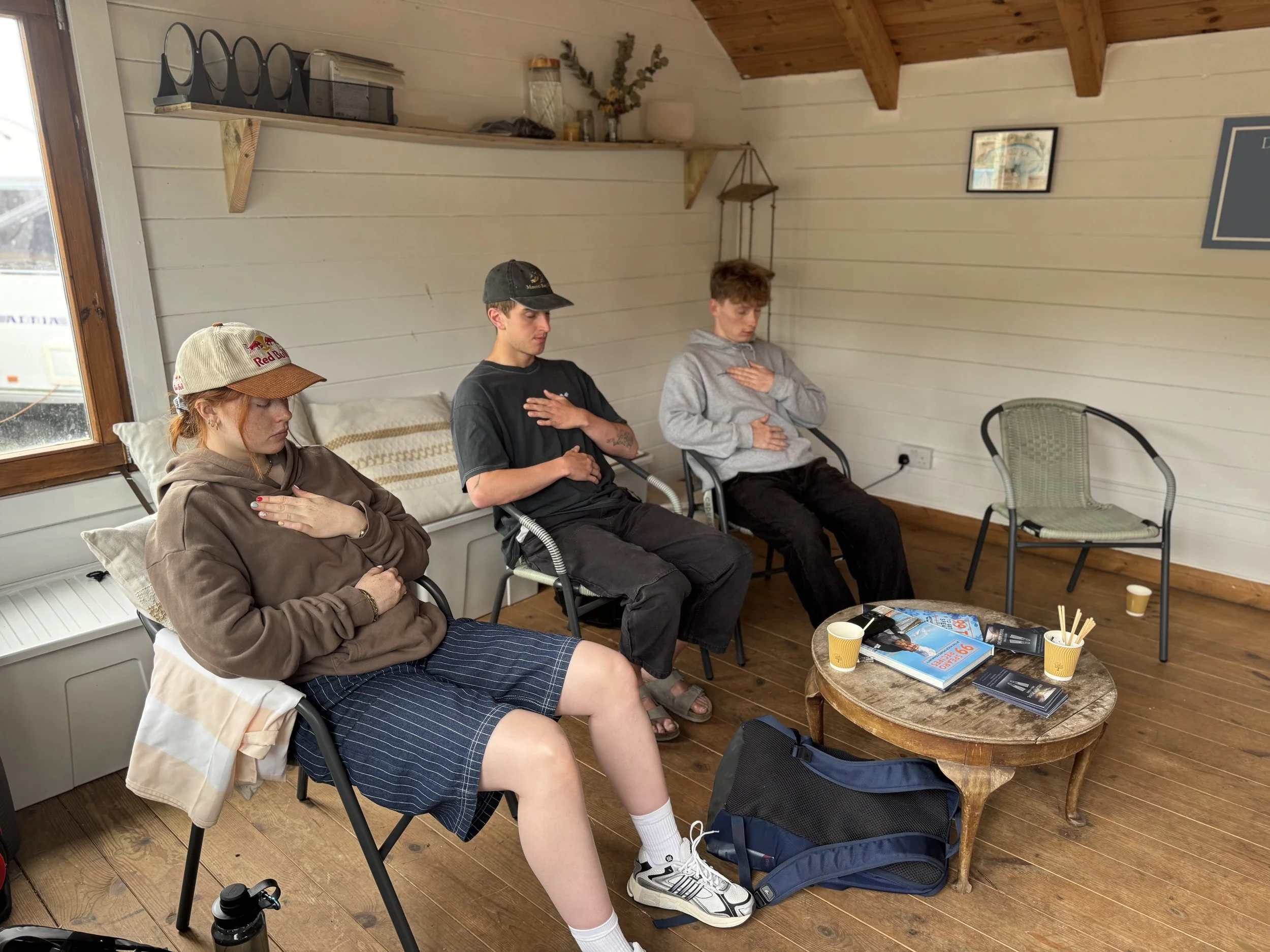
It is about creating a safe, structured and meaningful challenge environment where the athlete can begin to recognise what happens inside them while the moment is happening.
During the experience, athletes are supported to notice:
how they respond to pressure, discomfort or uncertainty
what happens to their breathing, focus, tension or decision-making
where fear, control, hesitation or overthinking may appear
how they regulate when the moment becomes demanding
what helps them stay connected, clear and present
what begins to change when awareness increases
The value of the experience is not only what the athlete completes.
The value is what the athlete starts to understand.
It gives them a lived reference point they can take back into training, competition and their wider performance environment.
How The Athlete Programme Works
The Catalyst Athlete Programme is delivered as a structured process.
Each stage has a purpose: to understand the athlete, create a meaningful experience, capture what shows up, translate it into performance themes, and support the athlete and their environment as the learning is applied back into training and competition.
1. Preparation
Before the experience, we build an understanding of the athlete, their sport, their current environment and the performance moments they are working through.
This may include conversations with the athlete, coach and relevant support team.
The aim is to understand where the athlete is in their season, what they are preparing for, what support already exists around them, and where pressure, confidence, decision-making, injury history or performance consistency may be showing up.
This preparation helps ensure The Catalyst Experience is connected to the athlete’s real world, rather than treated as a standalone challenge.
2. The Catalyst Experience
The athlete completes The Catalyst Experience in a safe, structured challenge environment.
The experience is designed to help the athlete meet their own responses when pressure, discomfort or uncertainty becomes real.
This is not about proving toughness.
It is about creating a meaningful environment where the athlete can begin to recognise what happens inside them while it is happening.
During the experience, the athlete is supported to observe, reflect and begin working with the responses that show up, rather than only analysing them afterwards.
3. Reflection and Insight Capture
Reflection happens during and after The Catalyst Experience.
This helps identify what showed up, how the athlete responded, and where those responses may connect to their sport, training, competition, injury return or wider performance environment.
The aim is not to overload the athlete with theory.
The aim is to make the experience usable.
Key themes are captured so they can be carried forward into the report, support-team discussion and integration phase.
4. Structured Performance Report and Integration Priorities
After the experience, a structured performance report is created to translate what showed up into clear performance themes and integration priorities.
The report is not a standalone document.
It is used as the starting point for a conversation with the athlete and relevant support team.
Together, we identify the key areas to work with during the integration phase and begin shaping how the learning can be applied back inside the athlete’s real training and competition environment.
The aim is to turn insight into a clear, practical direction for the next phase of development.
5. Performance Integration Phase
The integration phase runs across 8 weeks.
This is where the learning is carried back into the athlete’s real training, competition and performance environment.
This phase is not a fixed template.
It is shaped around the athlete’s sport, support structure, training calendar, competition schedule and the key moments where the learning is most likely to be tested.
This may include return to training, return to competition, higher-pressure training blocks, injury progression, competition preparation, technical progression, important coach conversations, or other moments where pressure, expectation or consequence are present.
The athlete’s current support structure remains central to this process.
The aim is to help the athlete, coach and support team understand what has been highlighted, apply it in the athlete’s normal environment, and continue developing it through the moments that matter most.
The structure is clear.
The process is individual.
The goal is to help the athlete strengthen their pressure-response process and build greater consistency across preparation, training and performance.

Performance Integration Phase
The Performance Integration Phase is where the learning from The Catalyst Experience is carried back into the athlete’s real world.
This phase runs across 8 weeks and is shaped around the athlete’s training, competition calendar, return from injury progression, or current performance environment.
The aim is not to leave the athlete with insight and expect them to work it out alone.
The aim is to help the athlete, coach and support team keep working with the learning when pressure becomes real again.
What integration can include
Individualised integration planning
The integration phase begins by identifying what the athlete is moving back into.
This may include training blocks, competition preparation, return to competition, return from injury, higher-pressure sessions, technical progression, coach feedback, support-team conversations or other performance moments where the learning is likely to show up again.
From there, the integration phase is shaped around the moments that matter most.
Athlete reflection and support
The athlete is supported in continuing to reflect on what is showing up in training, preparation, competition or recovery.
The aim is to help the athlete connect the learning from the experience to what is happening in their real environment.
Coach and support-team alignment
Where appropriate, the athlete’s coach and relevant support team are included in the process.
The aim is not to replace the coach or create a separate system around the athlete.
The aim is to help the athlete’s environment understand and continue the work, so the learning can be supported where performance actually happens.
Key performance moments
Where useful, important moments can be identified in advance.
These may include training sessions, competition blocks, return-to-performance milestones, difficult moments, setbacks, breakthrough performances, or other pressure points in the athlete’s calendar.
These moments create opportunities to connect the learning back into real performance demands.
Ongoing development
Throughout the integration phase, the athlete continues to work with the themes identified during the experience.
The process is designed to strengthen the athlete’s pressure-response process and build greater consistency across preparation, training and performance.

What Makes The Programme Most Effective
The Catalyst Athlete Programme works best when the learning has somewhere real to go.
The 8-week integration phase is most valuable when the athlete is returning to meaningful performance demands during that period.
This may include:
higher-level training
competition preparation
return from injury progression
return to competition
competition itself
important technical, tactical or psychological milestones
These moments allow the athlete to keep working with the learning while pressure, expectation and consequence are present.
The athlete’s existing support team is central to this process.
The Catalyst Programme does not aim to replace the athlete’s coach, sport psychologist or wider support structure. The aim is to help strengthen the environment already around the athlete, so the learning can continue where performance actually happens.
For this reason, the programme is strongest when the athlete, coach and relevant support team are open to working together through the integration phase.
What Athletes Develop
The Catalyst does not aim to create a perfect performer.
It develops the athlete’s ability to recognise what is happening, regulate in real time, and respond with greater clarity and intent when pressure is real.
Athletes who engage with the full programme can develop:
greater awareness of internal performance states
improved ability to recognise pressure responses as they happen
stronger emotional regulation under demand
clearer decision-making in key moments
greater confidence in uncomfortable situations
improved training-to-competition transfer
stronger communication with coaches and support staff
better understanding of fear, hesitation, control or tension patterns
more consistent preparation, response and performance
greater ownership of how they operate under pressure
Who This Is Best Suited For
The Athlete Development Programme is best suited for athletes who are actively training and moving towards meaningful performance environments.
This may include athletes preparing for competition, returning from injury, rebuilding confidence, working through pressure responses, or trying to stabilise performance across training and competition.
The programme can be delivered for individual athletes or small groups.
Typical group size: 1 to 4 athletes.
Small groups allow the programme to remain personal, focused and meaningful.
Step Into It
This is not something you understand from the outside.
It is something you experience.
If you want to explore how The Catalyst Athlete Development Programme could support you, your athlete or your performance environment, please get in touch to arrange an initial conversation.